
NFL Draft Night: Stay Home vs Flashy Player Choices
The NFL Draft: Two Very Different Paths to the Same Dream
Every year, the NFL Draft delivers more than just roster-building drama—it becomes a cultural moment. Prospects who have spent years grinding through high school, college, and pre-draft evaluations finally hear their names called. But how they choose to experience that life-changing moment varies dramatically.
Some prospects embrace the spotlight, walking across the stage in designer suits, flashing diamond chains, and shaking hands with the commissioner. Others opt for something far more personal—staying home, surrounded by family, away from the cameras and spectacle.
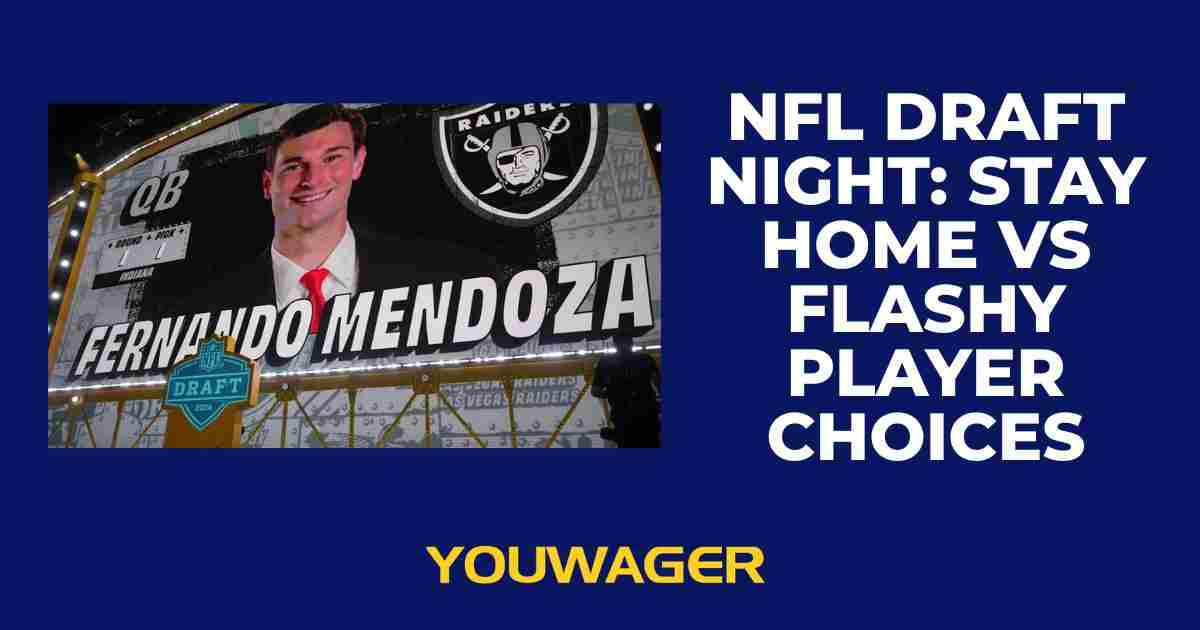
In 2026, that contrast was perfectly embodied by first overall pick Fernando Mendoza, who was selected by the Las Vegas Raiders and chose to experience the moment quietly at home with loved ones.
This divide—between understated and extravagant draft experiences—has become a defining element of modern draft culture.

Why Some Prospects Choose to Stay Home
For many players, the draft is not about the show—it’s about the journey. Staying home offers a level of comfort and authenticity that the bright lights of the draft stage simply cannot replicate.
Family First Mentality
Football careers are built on sacrifice, not just by players but by their families. Parents drive to practices, siblings sit through games, and entire households revolve around development. For some prospects, sharing the draft moment privately is a way to honor that collective effort.
Players who stay home often describe the experience as more meaningful. Instead of walking across a stage in front of thousands, they’re celebrating in living rooms filled with people who were there from the beginning.
In Mendoza’s case, his decision to remain at home reinforced that perspective. Rather than making a public spectacle out of becoming the No. 1 pick, he chose a setting that emphasized gratitude and connection.
Avoiding the Pressure of the Green Room
The “green room” at the draft has become notorious. Prospects sit in front of cameras waiting for their names to be called, sometimes much later than expected. That wait can be uncomfortable, even painful.
Players like Aaron Rodgers and Laremy Tunsil have had memorable draft slides while attending in person, moments that were broadcast live and replayed endlessly.
Staying home removes that uncertainty from public view. If a player falls down the board, the disappointment remains private rather than becoming a viral moment.
Control Over the Environment
At home, players control everything—from who is present to how the moment unfolds. There’s no strict schedule, no stage cues, and no media obligations until after the selection.
That level of control can be critical for athletes who prefer structure and emotional stability. It allows them to process the moment on their own terms before stepping into the public eye.
The Appeal of Attending the Draft in Person
On the opposite end of the spectrum are players who embrace the spotlight. For them, attending the draft is not just a moment—it’s a performance.
A Fashion Statement
Over the past decade, the draft has evolved into a runway. Players arrive in custom suits, bold colors, and high-end accessories, turning the event into a showcase of personal branding.
Names like Cam Newton and Joe Burrow are often associated with memorable draft-night fashion. Whether it’s vibrant patterns or understated luxury, the message is clear: this is their introduction to the league, and they intend to stand out.
Jewelry—chains, watches, and rings—has become a major part of that presentation. For many prospects, it symbolizes success after years of hard work. It’s not just about flash; it’s about storytelling.
The Walk Across the Stage
There is something iconic about hearing your name called, walking onto the stage, and shaking hands with the commissioner. That moment has been immortalized for decades and remains a dream for many players.
From Peyton Manning to Trevor Lawrence, that stage walk serves as a symbolic transition—from prospect to professional.
For players who thrive in high-energy environments, there is no substitute.
Immediate Media Exposure
Attending the draft guarantees instant visibility. Cameras capture reactions in real time, interviews happen on the spot, and social media amplifies every detail.
For players building a personal brand, that exposure is invaluable. Sponsors, fans, and analysts all get their first look at the newest faces of the league in a controlled, high-profile setting.

Fernando Mendoza: A Modern Example of the “Stay Home” Approach
When Fernando Mendoza was selected first overall by the Las Vegas Raiders in 2026, it marked a significant moment—not just for his career, but for how top prospects approach the draft.
Instead of attending the event, Mendoza remained at home with his family. No designer runway, no stage walk, no immediate spotlight—just a private celebration shared with those closest to him.
That choice sent a message. Even at the highest level, where expectations and media attention are immense, players still have the agency to define their own experience.
Mendoza’s decision reflects a broader shift. While the spectacle of the draft continues to grow, so does the recognition that not every player wants—or needs—to participate in it the same way.
The Evolution of Draft Night Culture
The contrast between staying home and attending the draft didn’t always exist at this level. In earlier eras, the draft was far less theatrical.
From Conference Rooms to Prime Time
The NFL Draft began as a modest event held in hotel conference rooms. There were no red carpets, no elaborate sets, and minimal media coverage.
Over time, the league transformed the draft into a marquee event. Today, it spans multiple days, features live audiences, and draws millions of viewers worldwide.
With that evolution came a shift in player participation. Attending the draft became both an honor and an opportunity.
Social Media’s Influence
Platforms like Instagram and Twitter have amplified the importance of presentation.
A player’s draft-night outfit, jewelry, and reactions can trend globally within minutes. That reality encourages some prospects to lean into the spectacle, knowing the exposure can shape their brand from day one.
At the same time, social media also highlights the benefits of staying home—showcasing emotional, authentic family moments that resonate just as strongly.
Personality and Psychology: The Real Divider
Ultimately, the decision to attend the draft or stay home often comes down to personality.
Extroverts vs. Introverts
Players who enjoy attention and thrive in high-pressure environments are more likely to attend. The stage, the crowd, and the cameras energize them.
Others prefer privacy. They may view the draft as a milestone rather than a performance, choosing to experience it in a more controlled setting.
Neither approach is inherently better—it’s about alignment with the individual.
Risk Tolerance
Attending the draft introduces uncertainty. A player projected to go early could slide, turning a celebratory moment into a stressful one.
Staying home mitigates that risk. It ensures that whatever happens, the environment remains supportive and familiar.
The Role of Agents and Branding Teams
Behind every draft decision is a network of advisors. Agents, publicists, and branding specialists all weigh in.
Strategic Visibility
For some prospects, attending the draft is a calculated move. It maximizes visibility, creates endorsement opportunities, and establishes a public identity.
Agents may encourage attendance for players with strong marketability, particularly those expected to be selected early.
Managing Expectations
Conversely, if there is uncertainty about draft position, advisors may recommend staying home. It avoids potential negative optics while preserving the player’s image.
In Mendoza’s case, despite being the projected top pick, the decision to stay home suggests a deliberate emphasis on personal values over marketing considerations.

Jewelry, Flash, and the Culture of Expression
The “flashy” side of the draft is often misunderstood. Jewelry and fashion are not just about showing off—they are forms of expression.
Symbolism of Success
Chains, watches, and custom pieces often represent milestones. They can commemorate family, hometowns, or personal journeys.
For many players, wearing jewelry on draft night is a way of bringing those stories onto the biggest stage.
Cultural Influence
Fashion and jewelry in sports are deeply tied to broader cultural trends. The draft has become a space where athletes express identity, creativity, and individuality.
Players like Deion Sanders helped pioneer that mindset decades ago, blending performance with personality.
Media Narratives and Public Perception
How players experience the draft also shapes how they are perceived.
The “Humble” Narrative
Players who stay home are often framed as grounded and family-oriented. Their decisions are interpreted as signs of humility and focus.
Mendoza’s 2026 draft night fits squarely into this narrative, reinforcing an image of composure and perspective.
The “Star Power” Narrative
Those who attend and embrace the spotlight are often seen as confident and marketable. Their presence contributes to the entertainment value of the event.
Neither narrative is inherently accurate or fair—but both influence how players are discussed from the moment they enter the league.
The Future of Draft Experiences
As the draft continues to evolve, the divide between staying home and attending may become even more pronounced.
Hybrid Experiences
Technology could enable more interactive home experiences, blending privacy with visibility. Players might celebrate at home while still participating in live broadcasts in meaningful ways.
Personalization
The league may continue to offer more flexible options, allowing players to tailor their draft experience without sacrificing exposure.
Conclusion: One Moment, Many Paths
The NFL Draft represents the culmination of years of effort, but there is no single “correct” way to experience it.
Some players will always choose the stage—the suits, the jewelry, the spotlight, and the roar of the crowd. Others will choose the quiet of home, surrounded by family, absorbing the moment in a more personal way.
In 2026, Fernando Mendoza reminded everyone that even as the first overall pick, you don’t have to follow the script. His decision to celebrate at home with family underscored a simple truth: the draft is about reaching the NFL—but how you get there, and how you experience that moment, is entirely your own.
Both paths lead to the same destination. The difference lies in what the moment means to the player—and how they choose to share it with the world.
All Sports Predictions
- MLB DIMELINE: Reduced Juice Baseball Series
- BETTING SCHOOL
- NFL Predictions and Picks
- NBA Predictions and Picks
- MLB Predictions and Picks
- College Basketball Predictions and Picks
- College Football Predictions and Picks
- NHL Predictions and Picks
- UFC Predictions and Picks
- Soccer Predictions and Picks
- Sports News
- SIGN UP NOW
Visit the Betting School and learn how to wager on the moneyline, spread, and total; on your favorite team or an undervalued underdog. Sign up with YouWager.lv now and get in the game with the best welcome bonus, click below:
NFL Draft Night: Stay Home vs Flashy Player Choices.